

Beyond the Should: Breaking Free from Endless Expectations
A Heart-Centered Guide to Perfectionism Recovery and Self-Acceptance
By Sharon Saevitzon, PCC, ELI-MP
Transforming accomplished women from "should-driven" perfectionism to love-centered authenticity through ancient wisdom and modern neuroscience

The Tyranny of "Should": When Achievement Becomes a Prison
"I should be further along by now."
"I should be grateful for what I have."
"I should be able to handle this better."
Despite your achievements, that nagging voice whispers that you're somehow not enough, not doing enough, not being enough.
This is the paradox I witness daily in my practice: highly successful women trapped in a cycle of endless "shoulds," where each accomplishment only raises the bar higher. The very drive that created your success has become the source of your suffering.
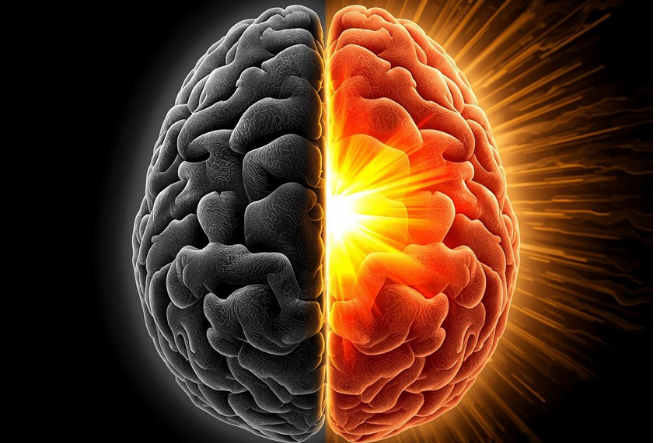
The Neuroscience of "Should": Understanding Your Brain on Perfectionism
Recent research in neuroscience reveals why "should" statements are so psychologically damaging. Dr. Kristin Neff's groundbreaking studies on self-compassion show that self-critical thoughts activate the brain's threat detection system, flooding your nervous system with stress hormones like cortisol. When you tell yourself you "should" be different than you are, your brain interprets this as an attack, not from an external threat, but from yourself.
The amygdala, your brain's alarm system, can't distinguish between a tiger chasing you and your own harsh inner critic. Both trigger the same fight-or-flight response that was designed to keep our ancestors alive, not to help modern women navigate complex emotional landscapes.
Meanwhile, research from the Center for Mindful Self-Compassion demonstrates that self-acceptance activates the parasympathetic nervous system—your body's natural healing and restoration mode. When you release the grip of "should," you literally shift your brain chemistry from threat to safety, from contraction to expansion.

Heart-Centered Transformation: The Antidote to "Should"
Ancient traditions have always recognized the heart as the seat of wisdom. In Sanskrit, the heart chakra is called Anahata, meaning "unstruck" or "unbeaten", referring to a sound that exists beyond the physical realm. This mystical understanding points to the heart's capacity to access truth beyond the conditioned mind's endless "shoulds."
Practical Integration: From Ancient Wisdom to Daily Practice
1. The "Should" Inventory (Modern Awareness + Ancient Reflection)
Begin by noticing your "should" statements throughout the day. Write them down without judgment, simply observe. Then, for each "should," ask yourself:
Whose voice is this really? (Often, we're carrying inherited expectations)
What would I choose if love, not fear, were guiding me?
How can I honor my growth while accepting where I am now?
This practice combines modern mindfulness with the ancient wisdom of witness consciousness found in many contemplative traditions.
2. The Sacred Pause (Ancient Wisdom + Modern Neuroscience)
Create space between trigger and response by implementing what I call the Sacred Pause:
Notice the "should" arising
Breathe consciously to activate your parasympathetic nervous system
Choose a response from love rather than fear
Act from this centered place
This practice honors both the Buddhist concept of mindful awareness and current understanding of neuroplasticity—your brain's ability to form new patterns.

The Ripple Effect: When Self-Acceptance Transforms Everything
When you release the grip of "should," something remarkable happens. The energy you've been using to fight against yourself becomes available for creation, connection, and authentic service. Your relationships deepen because you're no longer performing perfection but showing up as genuinely human. Your work becomes an expression of love rather than a desperate attempt to prove your worth.
I've witnessed this transformation countless times in my practice. Sarah, a corporate executive, discovered that releasing her "should be a perfect mother" freed her to actually connect with her children. Maya, an entrepreneur, found that accepting her anxious nature rather than fighting it allowed her to channel that energy into innovation and creativity.
This is the paradox of the heart-centered path: when we stop trying to be different than we are, we naturally evolve into who we're meant to become. Not because we "should," but because love naturally expands and grows.

The Invitation: Choosing Love Over "Should"
As you continue on your journey, I invite you to experiment with this radical idea: What if you are already enough, exactly as you are?
This isn't passive acceptance, it's the foundation for authentic transformation. When a plant grows, it doesn't criticize itself for being a seed yesterday. It simply allows the natural unfolding that love makes possible.
Ready to explore your own journey beyond "should"? Take the Self-Love Assessment to discover where you are on the path from perfectionism to authentic self-acceptance.
References
Neff, K. D. (2023). Self-compassion: The proven power of being kind to yourself. William Morrow Paperbacks.
Germer, C. K., & Neff, K. D. (2019). Teaching the mindful self-compassion program: A guide for professionals. Guilford Publications.
Cajete, G. (2000). Native science: Natural laws of interdependence. Clear Light Publishers.
Dalai Lama, & Cutler, H. C. (2009). The art of happiness: A handbook for living. Riverhead Books.
Schneider, B. D. (2007). Energy leadership: Transforming your workplace and your life from the core. John Wiley & Sons.
McCraty, R., & Shaffer, F. (2015). Heart rate variability: New perspectives on physiological mechanisms, assessment of self-regulatory capacity, and health risk. Global Advances in Health and Medicine, 4(1), 46-61.
About Sharon Saevitzon, PCC, ELI-MP
Sharon Saevitzon transforms accomplished women from perfectionist-driven achievement to love-centered authentic success through her unique integration of ancient wisdom traditions and evidence-based coaching practices. Drawing from her lineage as the great-granddaughter of a Kabbalah Rabbi and certified Energy Leadership Index Master Practitioner, Sharon has built a six-figure practice entirely through referrals, helping entire families discover that when we operate from love, it changes everything—our relationship with ourselves and with others.
Connect with Sharon at sharonsaevitzon.com or join the Heart-Centered Community for ongoing support in your transformation journey.


